Yearly Archives: 2013

719. Curaçao’s Oldest Tree
Our oldest tree is a giant Kapok (silk-cotton tree) and lives in Hòfi Pastor* (Priest’s Orchard). She was brought to Curaçao over 400 years ago by the Caiquetios, a tribe of peaceful Arawak Indians who fled Tierra Firme (Venezuela). She’s believed
719. Curaçao’s Oldest Tree
Our oldest tree is a giant Kapok (silk-cotton tree) and lives in Hòfi Pastor* (Priest’s Orchard). She was brought to Curaçao over 400 years ago by the Caiquetios, a tribe of peaceful Arawak Indians who fled Tierra Firme (Venezuela). She’s believed
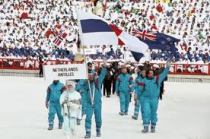
720. Our Olympic Bobsled Team
It turns out Jamaica isn’t the only tropical Caribbean island with an Olympic bobsled team… In fact, our team (Bart Carpentier Alting, Bart Drechsel) participated in the 1988 Calgary Olympics and actually beat (!) the Jamaican team – made famous
720. Our Olympic Bobsled Team
It turns out Jamaica isn’t the only tropical Caribbean island with an Olympic bobsled team… In fact, our team (Bart Carpentier Alting, Bart Drechsel) participated in the 1988 Calgary Olympics and actually beat (!) the Jamaican team – made famous
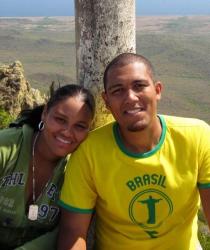
721. Curacao’s Budding Travel Entrepreneurs
I had the pleasure to meet two budding travel entrepreneurs: Sheedia Jansen (23), founder of The Hunt Curacao and Curacao Vacation Blog, and Jefferson Martina (27), founder of Curacao Trip, today. Both are grappling with Curacao’s relatively small size, and therefore, online/offline obscurity and
721. Curacao’s Budding Travel Entrepreneurs
I had the pleasure to meet two budding travel entrepreneurs: Sheedia Jansen (23), founder of The Hunt Curacao and Curacao Vacation Blog, and Jefferson Martina (27), founder of Curacao Trip, today. Both are grappling with Curacao’s relatively small size, and therefore, online/offline obscurity and

722. Curaçao’s Yellow Blooms
‘Fin fin a kose un panja fel di gala pa kibrahacha.’ ‘Spring rain has sown a bright yellow gown for the ax breaker.’ Haiku by: Kodachi Ken Senshi Translation by: Carolina Gomes-Casseres Kibrahacha (literally: ‘ax-breaker’, Tabebuia Billbergii) bursts into bloom
722. Curaçao’s Yellow Blooms
‘Fin fin a kose un panja fel di gala pa kibrahacha.’ ‘Spring rain has sown a bright yellow gown for the ax breaker.’ Haiku by: Kodachi Ken Senshi Translation by: Carolina Gomes-Casseres Kibrahacha (literally: ‘ax-breaker’, Tabebuia Billbergii) bursts into bloom
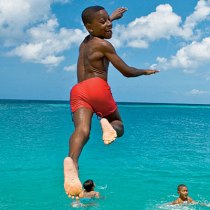
723. The Flying Boy from Curaçao
This photo popped up in one of my routine Google searches a little under a year ago. Struck by its beauty, I immediately saved it down to my computer, neglecting to source it. The colors and movement are (obviously) incredible:
723. The Flying Boy from Curaçao
This photo popped up in one of my routine Google searches a little under a year ago. Struck by its beauty, I immediately saved it down to my computer, neglecting to source it. The colors and movement are (obviously) incredible:
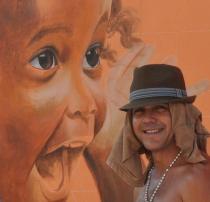
724. Curaçao Street Artist Garrick Marchena
Special thanks to Natasha Chatlein, one of the organizers of ‘Curaçao Night in San Francisco’ at de Young Museum (May 17, 2013) for this post. Don’t miss the event! Artist Spotlight: Garrick Marchena a.k.a the Civil Engineer slash Break Dancer
724. Curaçao Street Artist Garrick Marchena
Special thanks to Natasha Chatlein, one of the organizers of ‘Curaçao Night in San Francisco’ at de Young Museum (May 17, 2013) for this post. Don’t miss the event! Artist Spotlight: Garrick Marchena a.k.a the Civil Engineer slash Break Dancer

725. Curaçao Hospitality in a Nutshell
Most yu’i Kòrsou, particularly on the western side of the island, are avid peanut growers. Tradition has it that hosts would offer their guests handfuls of ‘pinda pa kaminda’ (peanuts for the road), so as to hold them over as they journey back to
725. Curaçao Hospitality in a Nutshell
Most yu’i Kòrsou, particularly on the western side of the island, are avid peanut growers. Tradition has it that hosts would offer their guests handfuls of ‘pinda pa kaminda’ (peanuts for the road), so as to hold them over as they journey back to
726. Curaçao’s Candle Cactus Soup
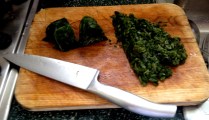
Kadushi (candle cactus) is among our most abundant natural resource, so our resourceful grandinan (literally: big ones) invented this delicious, recipe to reap its healthy, organic, energetic benefits… spines, not included! Not to be confused with another slippery favorite, Guiambo (okra soup) — 1. Head
726. Curaçao’s Candle Cactus Soup
Kadushi (candle cactus) is among our most abundant natural resource, so our resourceful grandinan (literally: big ones) invented this delicious, recipe to reap its healthy, organic, energetic benefits… spines, not included! Not to be confused with another slippery favorite, Guiambo (okra soup) — 1. Head

727. Curaçao’s Beyísima
Our wild lady, Beyísima (Antigonon leptopus) simply requires a few spritzes of rain to transform into the Belle of Curaçao. She snakes her way into our hearts in record time, spreading her weedy tendrils (as long as 40 ft!), digging small
727. Curaçao’s Beyísima
Our wild lady, Beyísima (Antigonon leptopus) simply requires a few spritzes of rain to transform into the Belle of Curaçao. She snakes her way into our hearts in record time, spreading her weedy tendrils (as long as 40 ft!), digging small
728. Curaçao Sorghum
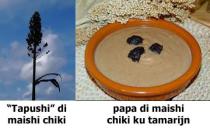
Sometimes referred to as milo, in India: jowar, in Curaçao: maishi chikí (literally: small corn), sorghum (cereal grain) originated in Africa about 5,000 years ago. Drought and heat tolerant, sorghum is considered a staple food in dry, arid regions. Those of us living in the US and Europe
728. Curaçao Sorghum
Sometimes referred to as milo, in India: jowar, in Curaçao: maishi chikí (literally: small corn), sorghum (cereal grain) originated in Africa about 5,000 years ago. Drought and heat tolerant, sorghum is considered a staple food in dry, arid regions. Those of us living in the US and Europe
729. Curaçao’s Spirited Cow Horn
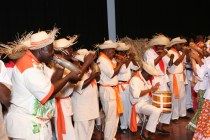
Before trumpets, trombones and loudspeakers, we had our ‘Kachu’ (pronounced: ‘Ka-choo’) or ‘Kachu di Baka’ (cow’s horn). We can’t take full credit, we probably imported her from Central Africa, the Bantu people would make her out of antelope horns. Our
729. Curaçao’s Spirited Cow Horn
Before trumpets, trombones and loudspeakers, we had our ‘Kachu’ (pronounced: ‘Ka-choo’) or ‘Kachu di Baka’ (cow’s horn). We can’t take full credit, we probably imported her from Central Africa, the Bantu people would make her out of antelope horns. Our

730. Curaçao’s Thanksgiving Parade
Our annual harvest festival, Seú, dates back to the 17th century when slaves would gather together in the kunuku (countryside) to pick the harvest at the end of growing season. A good harvest consisted of sorghum stalks, pumpkins, peanuts, watermelons, cucumbers, peppers, and other vegetables. Some
730. Curaçao’s Thanksgiving Parade
Our annual harvest festival, Seú, dates back to the 17th century when slaves would gather together in the kunuku (countryside) to pick the harvest at the end of growing season. A good harvest consisted of sorghum stalks, pumpkins, peanuts, watermelons, cucumbers, peppers, and other vegetables. Some

731. Curaçao Drought
“Our nature is rugged… rough… and not just around the edges. Her charm lies in her resilience. She is what she is. She resembles our temperament… authentic, but not always welcoming.” – Writer, poet, painter, Curaçao culture fiend, Philip A. Rademaker
731. Curaçao Drought
“Our nature is rugged… rough… and not just around the edges. Her charm lies in her resilience. She is what she is. She resembles our temperament… authentic, but not always welcoming.” – Writer, poet, painter, Curaçao culture fiend, Philip A. Rademaker

732. Curaçao’s Strong Female Hands
Straw hats were Curaçao’s single most important export in the early 20th century. In fact, they’re the only rural product to achieve that status. International demand was predominantly driven by two distinct markets: 1. wealthy, fashionable American and European businessmen happy to
732. Curaçao’s Strong Female Hands
Straw hats were Curaçao’s single most important export in the early 20th century. In fact, they’re the only rural product to achieve that status. International demand was predominantly driven by two distinct markets: 1. wealthy, fashionable American and European businessmen happy to

733. Sketches of Curaçao Wisdom (Part 5)
ALL PROVERB PRINTS BY ANGUINE HODGE. #717. Sketches of Curaçao Wisdom (Part 6) #733. Sketches of Curaçao Wisdom (Part 5) #787. Sketches of Curaçao Wisdom (Part 4) #824. Sketches of Curaçao Wisdom (Part 3) #844. Sketches of Curaçao Wisdom (Part 2) #860. Sketches of Curaçao Wisdom
733. Sketches of Curaçao Wisdom (Part 5)
ALL PROVERB PRINTS BY ANGUINE HODGE. #717. Sketches of Curaçao Wisdom (Part 6) #733. Sketches of Curaçao Wisdom (Part 5) #787. Sketches of Curaçao Wisdom (Part 4) #824. Sketches of Curaçao Wisdom (Part 3) #844. Sketches of Curaçao Wisdom (Part 2) #860. Sketches of Curaçao Wisdom
 1000 Awesome Things About Curaçao